Master Your Brand: The Ultimate 40oz Tumbler Template
If you are in the business of creating custom drinkware, you know that the 40oz tumbler is currently the king of the market. From the morning commute to the gym, these massive vessels are everywhere, and they offer a massive canvas for your creativity. However, designing for a curved, stainless steel surface presents unique challenges. Unlike a flat piece of paper, a tumbler requires precise measurements and an understanding of how graphics distort when wrapped around a cylinder. This is where a high-quality 40oz Tumbler Template becomes the most valuable asset in your toolkit. It removes the guesswork, allowing you to focus entirely on the art rather than the technical specifications.
It is crucial to understand exactly what you are acquiring when you purchase this type of resource. THIS IS A DIGITAL ITEM. NO PRINTED ITEM WILL BE SHIPPED TO YOUR HOME. You are not buying a physical tumbler; you are investing in the blueprint to create professional-grade designs for them. This distinction is vital for entrepreneurs and designers. A physical product can only be used once, but a digital asset like a 40oz Tumbler Template allows you to create infinite variations, test concepts instantly, and streamline your production workflow. It is the bridge between a rough idea and a finished product ready for sublimation, vinyl wrapping, or engraving.
The Anatomy of a Professional Tumbler Template
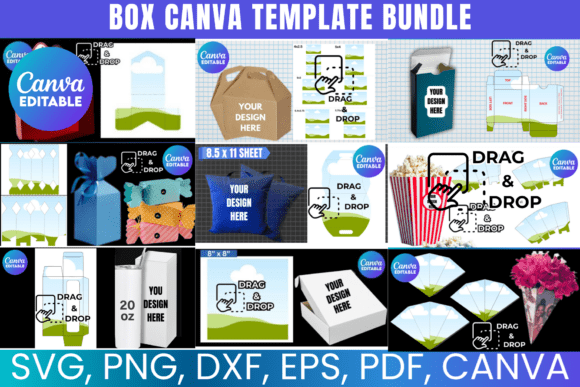
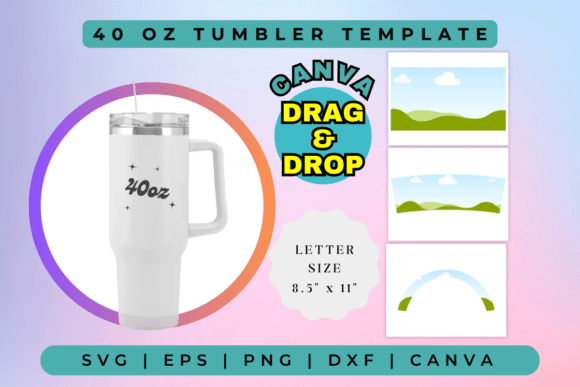
What separates a mediocre template from a professional one? The answer lies in the versatility of the file formats. A comprehensive 40oz Tumbler Template package should cater to every stage of the design and manufacturing process. When you open your download, you should expect a suite of tools designed to integrate seamlessly with your preferred software. This includes a Canva Link for those who prefer browser-based editing, allowing for quick customization of colors, fonts, and layouts without needing expensive software subscriptions. This is particularly helpful for small business owners who want to mock up designs for client approval quickly.
Beyond the user-friendly Canva option, the technical backbone of a great template lies in its vector files. You will typically find SVG, DXF, and EPS files included. The SVG file is the industry standard for cutting machines like Cricut Design Space and Silhouette Designer Edition, ensuring your cuts are smooth and scalable without pixelation. For those using CNC laser cutting machines or the basic edition of Silhouette software, the DXF file is optimized to read the paths correctly. Finally, the EPS file offers scalability for professional editing in heavyweight software like Adobe Illustrator or CorelDraw, which is essential for complex logo design and brand identity work. Additionally, a high-resolution PNG file with a transparent background is indispensable for digital proofs, web mockups, and social media presentations.
Practical Application: From Concept to Production
When you sit down to create a design, the template acts as your structural guide. In editorial design or web design, we often talk about the grid system; in tumbler design, the template is your grid. It shows you exactly where the handle cutouts will sit, ensuring that your text or imagery isn’t accidentally hidden by the plastic grip. It also delineates the bleed areas—the parts of the design that wrap around to the back and might get cut off or overlapped during the manufacturing process.
For packaging design and product branding, consistency is non-negotiable. If you are launching a line of drinkware for a client, you need to ensure that the logo placement is identical on every unit. A 40oz Tumbler Template allows you to lock in those coordinates. You can create a master file where the branding elements are fixed, and only the decorative graphics change. This ensures a professional finish that elevates the perceived value of the product. It transforms a hobbyist project into a commercial-grade product line.
Design Strategy and Visual Hierarchy
Using a template effectively also involves understanding visual hierarchy. The large surface area of a 40oz tumbler can be overwhelming. If you fill every inch with text or busy patterns, the design becomes noise. Instead, use the template to plan your focal points. Perhaps the "front" of the tumbler (the area facing outward when held) features a bold display typeface or a handwritten font, while the "back" contains smaller contact information or social media handles.
Consider how font pairing interacts with the physical medium. A script font might look beautiful on a flat screen, but on a curved, reflective surface like stainless steel, it can become difficult to read if the stroke is too thin. This is where the template allows you to test readability before you waste expensive sublimation paper or vinyl. By printing a test sheet and wrapping it around the template (if printed) or using the digital overlay to simulate the curve, you can see if your chosen typeface holds up. You might find that a bolder sans serif font or a robust serif font offers better legibility from a distance, which is crucial for social media graphics and product photography.
Streamlining Your Creative Workflow
For the crafter or entrepreneur, time is money. Manually measuring a tumbler to create a cut line takes time and introduces the risk of human error. Even a millimeter off can result in a gap at the seam or an overlap that creates a lump. Utilizing a pre-made 40oz Tumbler Template is a form of professional efficiency. It allows you to "start designing like a pro — no design skills needed" because the technical barrier is removed.
Furthermore, these templates serve as excellent design assets. They are not just for making one tumbler; they are resources you can use repeatedly. Whether you are creating seasonal collections for a holiday market or designing corporate gifts, the template is the foundation. It supports your brand identity by ensuring that every physical product you release meets a high standard of precision. In the competitive world of custom drinkware, that precision is what separates the amateurs from the established businesses. By leveraging the correct file formats—whether it's an SVG for your cutter or an EPS for your vector work—you ensure that your creative vision translates perfectly onto the physical object.